Monday, January 25, 2016

R.I.P. David Bowie

bowie_1
Two weeks ago, I read the morning news with palpable dread: rock legend David Bowie had died.
I was late to love his music, first introduced to Bowie at age 15 via the soundtrack covers in the 2004 Wes Anderson flick, The Life Aquatic. Even cooled by the unclad, mellifluous strumming and voice of Seu Jorge, the essence of Bowie blinked through: searing pain, open-veined longing, and a fearless dazzle in the dark.
After college, I picked Bowie up directly after hearing “Rebel Rebel”. I fell quite flatly for the alien mystique of Ziggy Stardust, one of the alter egos Bowie took up throughout his musical career. There was something rigorously, honestly cool about this man, this character, who could pretend to be from outer space, on a mission to share rock ‘n roll with the waiting coasts of the world. Completely out there. And yet the focus of his music was always other people’s lives. His art expressed the anxieties and flops, and yearnings, of the denizens of Earth.
Immediately after Bowie’s death, praise began to circulate with an emphasis on his out-there-ness. Simcha Fisher at Aleteia admitted that, in fact, Bowie’s extraterrestrial persona was never what she appreciated about his music:
“That voice. Alien? No. It sounded like wood weathered to silver by the ocean; it sounded like steel corroded into intricate designs; it sounded like crazed glass that had cracked but not shattered. Pain and anger and weariness and wit — these are not alien or martian or otherworldly. They are human, and so was he.”
In a world of hackneyed artists, David Bowie’s songs had nothing of the poisonously insipid malaise that makes up so much of mainstream culture. The Vatican newspaper L’Osservatore Romano paid tribute to Bowie, calling him artistically rigorous and “never banal”.
The President of the Pontifical Council for Culture, Cardinal Gianfranco Ravasi, tweeted fitting lyrics from Bowie’s song Space Oddity:
Screenshot (842)
Is it crazy that I find Jesus Christ in this? No. Christ is the most sublime, transcendent. He entered the world from eternity, from glory unfathomable, from the very arms of the Creator–and he became human. “Pain and anger and weariness and wit” – these are things that describe Christ’s life. Shaped in the waters of Mary’s womb, his bones would become pressed to the point just before breaking, for our sake.
For love of us, Christ carried our agony and angst, our nostalgia for a world of seamless joy and peace, and then poured that love out for everyone on the cross. I believe some of that love entered into David Bowie, and made his art possible.
Perhaps Kristen Walker Hatten said it best when she wrote,
We are all creators, because we were made by a Creator, and He made us something like Himself. David Bowie … took his pain and loneliness and … his experience on this planet and made it Art. He made Music. He was a human. He tried to be on this earth in a way that was beautiful and made sense. … This sinner created beauty on earth that wasn’t here before he got here, and he shared it with the whole world, and he let us all see his pain and loneliness and brokenness and weirdness so we would feel a little bit better about ours.
To take a little bit of pressure off us. Was David Bowie a saint? No. But he was a soulful weirdo, a beneficent genius, an incredible showman. He was a child of God who worked tirelessly to give his audience the gift of good music up until the very end. He died of cancer two days after releasing his latest album, Blackstar.
That same day, his wife Iman posted an image to her Instagram with the words, “The struggle is real but so is God.” Indeed. Requiem aeternam dona ei, Domine, et lux perpetua luceat ei. Requiescat in pace, Starman. Amen.

_____

A version of this post originally ran on The Pilgrim Log, blog of the Pilgrim Center of Hope.

Tuesday, April 14, 2015

What Pro-Life Work Looks Like: "I've been to jail a few times. LOL"

I haven't identified as "pro-life" since college, but these days the movement is making me proud.

In February, Abby Johnson (ex-Planned Parenthood Director turned pro-life activist) spoke alongside Sister Helen Prejean, CSJ, (anti-death penalty activist, author of Dead Man Walking) at the Consistent Life Ethic Conference. Topics included abortion (of course, but also), racism, feminism, and the death penalty. The latter presentation garnered a low turnout, but it was an applause-worthy effort to get people talking about all of these under one roof.

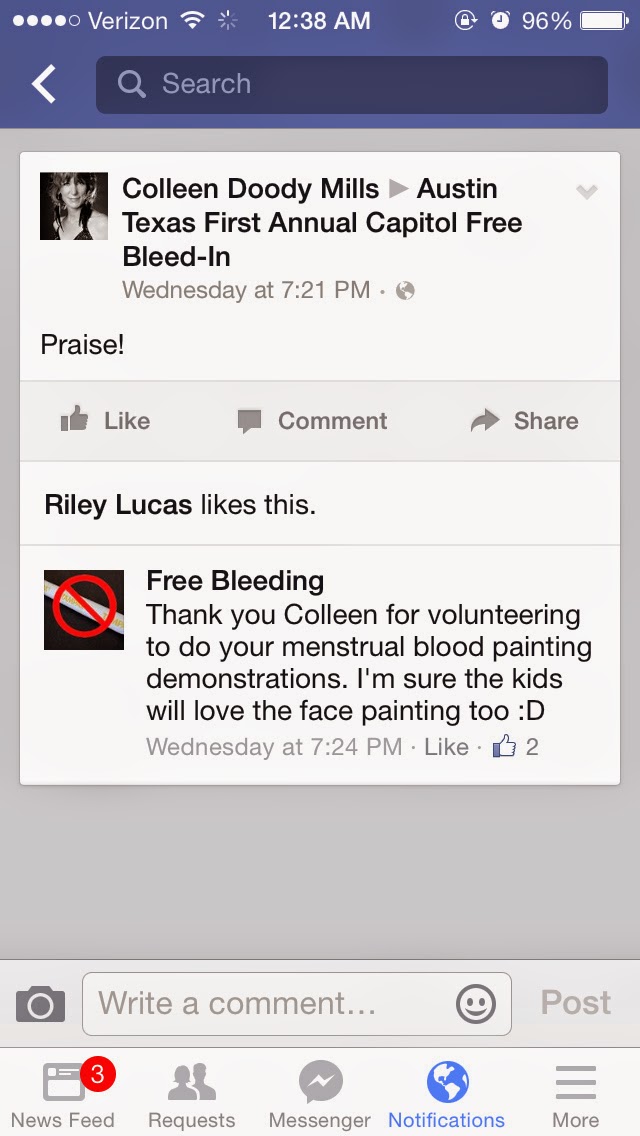
Another proud moment: not long ago I opened Facebook to see this conversation from a pro-life friend, two nights after a woman was arrested for throwing a molotov cocktail at a pro-life group keeping vigil in front of an Austin Planned Parenthood.


A reminder that ultimately it's not "us vs. them", especially when people need help.

"Beatitude 6 - Consciousness"
Stanley Spencer
"Blessed are the pure of heart, for they will see God (in other people)..."
(Matthew 5:8)


Wednesday, October 15, 2014

Who Would Want To Live In a Ghetto?

I originally wrote a version of this post for the Pilgrim Center of Hope.

alley
Alley. Jacek Yerka (2004)
As the media assistant for the Pilgrim Center of Hope I do a number of things, including screening telephone calls for our weekly show Catholicism Live!. (That means if you called and weren’t given time to talk about your question or comment, you can blame me. Please send all hate mail to media@fakeaddress.com.)
Last week, we had a show about porn. Not my favorite talk show topic, but my job was thankfully behind the scenes for this one. Though if I were the interviewer I'd say, "Other people's sex is boring. Porn is stupid. Let's talk about real intimacy, and why it's funny."
The promo for this episode got thirteen shares on Facebook. Thirteen! But you know who didn’t share the promo?
The one lady who called in.
I know this because I talked with her for a few minutes, and she vented her spleen about just how terrible it was that we were talking about porn.
Couldn’t we talk about something else?, she wanted to know.
There’s so much beauty in the faith and rich history of the Church, it would be better to tell others about those things, she asserted.
Do we really think someone who views pornography would listen anyway?, she asked.
And
 What if a child was listening and, you know, getting ideas!
It was clear from the conversation that she just thought the subject was disgusting and didn’t want to be made uncomfortable. Never mind mercy, forget hope – she just didn’t want to deal with the ‘ew’ factor.
Well, let me tell you: all sin is ugly. All sin. There will always be particular kinds of sins which bother us more than others, for good reasons. There is wisdom in being disturbed. But sheesh, lady. 
There was one other comment she made that was particularly curious: she complained that the program had replaced the EWTN one on the Crusades. That, she asserted, is the kind of thing people should be learning about. We need to be able to defend our faith, after all, and misinformation about the Crusades is always being used against the Church. In other words, Why worry about sinners who are already lost? We need to defend ourselves!
No, people. This is exactly the wrong attitude, and its ironic to worry about being misunderstood while advocating ignorance toward others. I’m reminded of this episode as I read some of the feedback on the bishops’ recent document, Relatio post disceptationem, the result of a week of discussion at the ongoing Synod on the Family in Rome.
Much ink has been spilt over the emphasis on what’s called the “law of gradualness” – a long established, common sense rule of pastoral theology which encourages spiritual advisors to keep in mind that people grow gradually rather than all at once.
The bishops have voiced a desire to ponder whether the Church has failed to create a welcoming atmosphere for people in “irregular unions” (homosexuals, divorced and civilly remarried Catholics, cohabitating couples). They would like to consider how keeping the “law of gradualness” in mind could allow Church leaders to seek out, walk beside, and offer love to people even when they are not living in full communion with the Church.
Here is one beautiful section of the document:
23. Imitating Jesus’ merciful gaze, the Church must accompany her most fragile sons and daughters, marked by wounded and lost love, with attention and care, restoring trust and hope to them like the light of a beacon in a port, or a torch carried among the people to light the way for those who are lost or find themselves in the midst of the storm.
25. …The Church has to carry this out with the tenderness of a mother and the clarity of a teacher (cf. Eph 4,15), in fidelity to the merciful kenosi of Christ. The truth is incarnated in human fragility not to condemn it, but to cure it.
Many Catholics in the public sphere have praised this tonal shift from the bishops. While there are challenges and open questions to be carefully contemplated (as always), it clearly addresses issues with due consideration that have needed this kind of attention for a long time.
refreshment
Refreshment at the city’s fountain of Taorimina. Ferdinand Georg Waldmüller (1846)
But not all are happy with the document. Some Catholics are downright panicky. Consider these comments gleaned from Facebook:
“The truth is that if it’s approval people want, there are many other better places to find it. The Church’s role should simply be to proclaim the truth. Those who have ears will hear and God will build His Church.”
“Having just attended a retreat on the family, and restoring family life, I got a very clear perspective on the family, and how broken the family is in our society, and how fundamental the family is to our society. This synod, if it persists in the homosexual context, will completely break what the family is.”
“Jesus called a spade a spade way more than anybody else in the Bible. The results of the questionnaire sent out last year should have the Fathers of the Church scared for their eternal lives having allowed so many people to not only fall into but also to embrace grave sin. Their response: to focus on the positive aspects of the sinful choices Catholics have embraced.”
Do you see the same defensive irony in these comments as the lady who called into last week’s show? On the one hand, the Kingdom of God deserves to flourish, to have its truth understood and its rich splendor enjoyed. On the other hand, the Kingdom of God is a ghetto, so if the doors were opened, the roof would likely come tumbling down.
One of these views is correct, and here’s a hint: Who would want to live in a ghetto? Besides Leticia Adams.
rainbow
Rainbow, New York City. John French Sloan (1912)

Sunday, July 13, 2014

"Faith" "Hope" "Love" by Czeslaw Milosz

Faith

Faith is whenever you look 
At a dewdrop or floating leaf
And know that they are there because they have to be.
Even if you close your eyes and dream up things
The world will remain as it has always been
And the leaf will be carried by the waters of the river.

You have faith also when you hurt your foot
Against a sharp rock and you know
That rocks are meant to hurt feet.
See the long shadow that is cast by the tree?
We and the flowers throw shadows on the earth.
What has no shadow has no strength to live.


Hope

Hope is with you when you believe
The earth is not a dream but living flesh,
That sight, touch, and hearing do not lie, 
That all things you have ever seen here
Are like a garden looked at from a gate.

You cannot enter. But you're sure it's there.
Could we but look more clearly and wisely
We might discover somewhere in the garden
A strange new flower and an unnamed star.

Some people say we should not trust our eyes,
That there is nothing, just a seeming,
These are the ones who have no hope.
They think that the moment we turn away,
The world, behind our backs, ceases to exist,
As if snatched up by the hands of thieves.


Love

Love means to learn to look at yourself
The way one looks at distant things
For you are only one among many.
And whoever sees that way heals his heart,
Without knowing it, from various ills-- 
A bird and a tree say to him: Friend.

Then he wants to use himself and things
So that they stand in the glow of ripeness.
It doesn't matter whether he knows what he serves: